

Le Rubis
World War II Submarine Wreck
Travel time: 5 minutes, Diving depth: 34m–38m
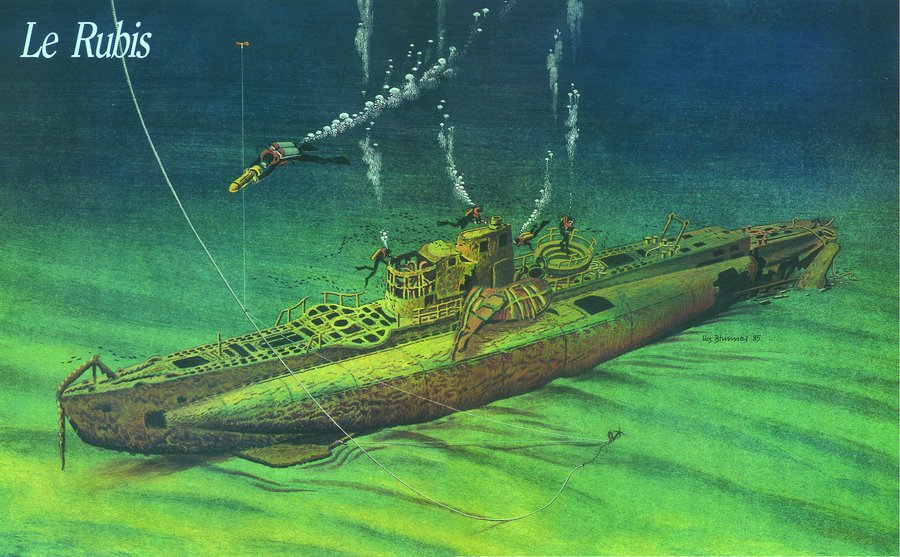
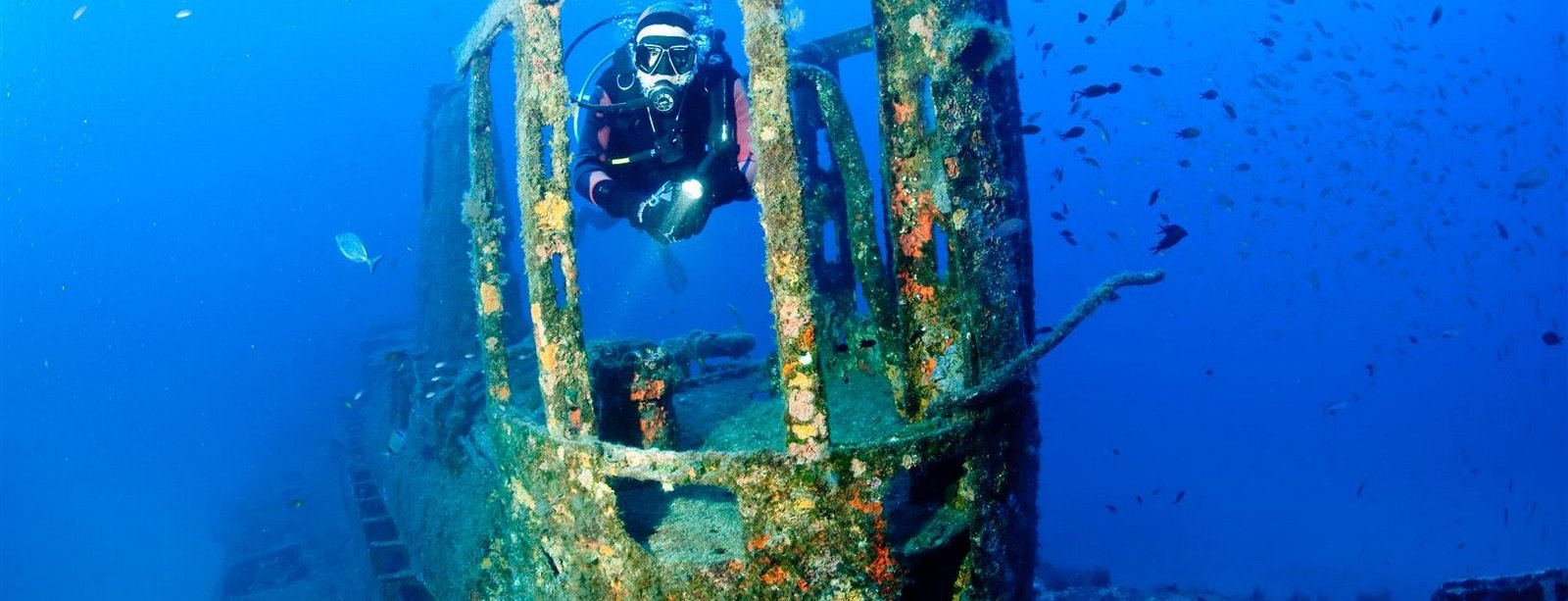
Descending down the line into the blue, and at 15 meters, making out the contours of the submarine – this will likely be one of your most powerful diving experiences!
During World War II, the “Rubis” was employed by the French Navy as a minelayer. On January 31, 1958, she was honorably scuttled.
From then on, it served the French Navy as a sonar training target. Subsequently, it was discovered by divers.
Today, this submarine is considered one of the three most beautiful dive sites in the Mediterranean and is renowned as far away as the United States. On this dive, you will encounter massive moray eels, conger eels, and immense schools of fish—the kind typically seen only in the South Seas.
Just a 5-minute boat ride from the dive center!
Le Prophète
Merchant Cargo Ship
Travel time: 15 minutes, Diving depth: 28-32 m
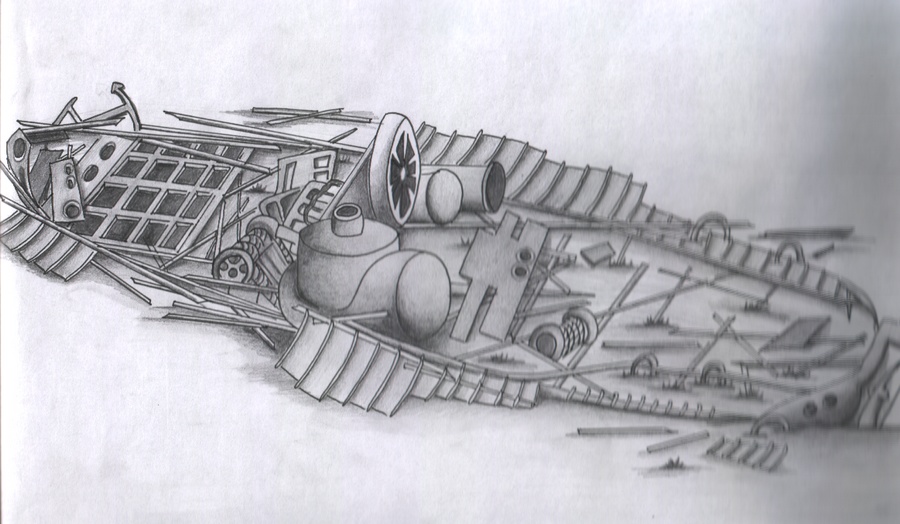
Built in 1853 at the Charles Reynaud shipyard in Sète, the *Prophète* was one of the first steamships to feature a modern propeller rather than old-fashioned paddle wheels. On March 10, 1853, the merchant vessel – 41.5 meters in length and 200 gross registered tons – was launched. Just four years later, it was sold to Claude Mourou for the sum of 70,000 francs – an enormous amount for the time – and thereafter plied the route between Algeria and the Provençal coast. On March 26, 1860, while carrying a cargo of grain, the Prophète was caught in a severe storm; Captain Cotton immediately sought shelter in a bay near Agay. Nevertheless, a few days later, amidst heavy seas, the ship struck a submerged rock near Cap Lardier and had to be abandoned. The stricken vessel soon sank beneath the waves.
The Prophète rests at a depth of 34 meters in water that is typically very clear. Moray eels and conger eels find an ideal sanctuary within the wreck and are frequently encountered there. After 140 years on the seabed, the ship’s contours remain clearly discernible through its planks, which have sagged away to the sides. Amidships, the massive steam boiler rises upward, topped by an impressive flywheel measuring approximately 5 meters in diameter. The steering mechanism can still be found at the stern; alongside huge schools of fish, octopuses also like to make their home here.
Le Tell
Merchant cargo ship, 76 meters in length
Travel time: 5 minutes, Diving depth: 5m–18m
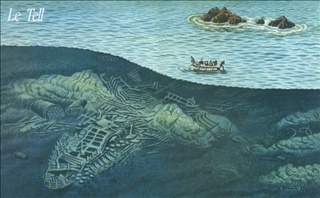
A coastal freighter that entered service on March 11, 1879, in La Seyne. After suffering several mishaps during its operational life, the freighter sank on October 25, 1913, amidst strong easterly winds. Even today, its original cargo – sacks of cement – can be found scattered throughout the site. The wreck lies in shallow water off Cap Camarat.
Just a 5-minute boat ride from the dive center!
Le Togo
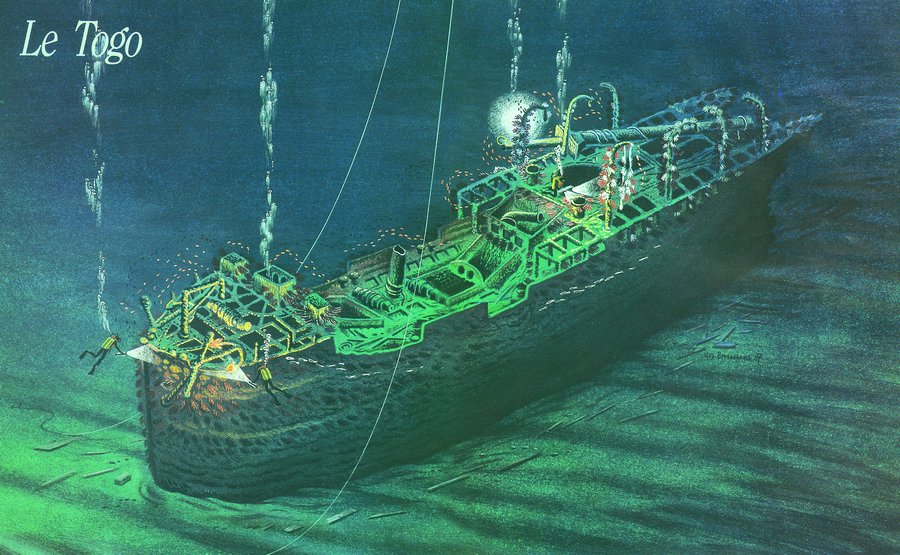
The Togo – also known as the Ville de Valence – ranks among the most impressive deep-water wrecks on the French Mediterranean coast. Built in 1882, the steam cargo ship measured approximately 76 meters in length, was considered technically advanced for its time, and sank in two sections in the Bay of Cavalaire on May 12, 1918, following a mine explosion.
The wreck is large, deep, and can only be fully explored over the course of multiple dives. The bow begins at approximately 45 to 48 meters, the break point lies at around 61 meters, and the stern is situated some distance away at a depth of up to 68 meters; a diving depth of roughly 45 to 61 meters is frequently cited for the main section. Particularly impressive are the massive superstructures, the engine room, anchors, winches, and propellers, as well as the dense red gorgonians that lend the wreck its distinctive appearance.
La Poursuivante
French destroyer from World War I
Travel time: 5 minutes, Diving depth: 45–60 m
Built on August 4, 1936. Following an accident on November 27, 1942, she was disarmed in favor of another warship. In 1947, she was sold to Italy. On October 19, 1947, she sank off Cap Camarat under unexplained circumstances.
She measured 80.7 meters in length, with a beam of 7.72 meters. Her 22,000-horsepower boilers propelled this torpedo boat to a speed of 34.5 knots. Her armament consisted of two 100mm guns, two 550mm torpedo tubes, and several 13.2mm machine guns for anti-aircraft defense. A depth charge thrower at the stern completed her equipment.
During the Spanish War, the Poursuivante was struck by two shells from shore bombardment.
At the beginning of the Second World War, the ship took part in Operation CABO.
Following the French capitulation, she was ordered to scuttle herself near Toulon on November 27, 1942, in order to avoid being handed over to German forces. Although she was salvaged on July 1, 1943, she did not actively participate in the war again during the subsequent years.
Today, she lies broken in two parts at a depth of 58 meters. The fracture point offers a glimpse into the interior of the hull; however, penetration diving is not possible due to hanging metal struts. The longer bow section lies keel-up and is particularly impressive due to its massive dimensions, while the shorter stern section rests at an angle on its side and is therefore well-suited for diving. Here, the rudder assembly and the massive propeller housing prove to be particularly worth seeing. This is also where the only intact section of the superstructure still stands.
Large schools of fish are rarely observed here; however, conger eels, moray eels, and lobsters are frequently found.
Just a 5-minute boat ride from the dive center!
Le Ramon Membru
Merchant cargo ship, 80 meters in length
Travel time: 30 minutes, diving depth: 10–20 m
Built in 1873. Following an explosion on board, the ship sank in early June 1921. The exact circumstances remain unexplained.
Built in 1873 by the Gilbert & Cooper shipyard in Hull (UK), the ship – then christened “Elguezabal, Ballesreros II” – represented a technical innovation of its time: it featured five watertight steel bulkheads extending along the entire length of the hull. Considered large for the era, the freighter measured 80 meters in length and 11 meters in beam, with a displacement of 1,153 tons.
After numerous years of service, the freighter was finally renamed “Ramon Membru.”
On a dark June night in 1921, the ship was rocked by a violent explosion and rapidly sank beneath the waves just off the harbor entrance of Cavalaire. Nevertheless, the steamship Cabo Vilano, rushing to the scene, managed to rescue the 37-member crew. Since neither the circumstances of the explosion nor the composition of the cargo could be determined, it is strongly suspected that the *Ramon Membru* had served as a smuggler ship during its final years.
The wreck lies at a depth of 17 to 22 meters in the entrance to Cavalaire Harbor, making the approach – as well as ascents and descents – challenging. Consequently, particularly during the peak season when heavy boat traffic is to be expected, divers should ascend along the anchor line or a mooring buoy.
The wreck itself was severely damaged due to the explosion and its prolonged submersion in relatively shallow water. Lying on its side, only the vessel’s port flank rises up toward the viewer. Otherwise, one is met with a chaotic jumble of steel plates, pipes, and twisted metal, lending the entire wreck a somber and desolate atmosphere. The wreck rests on a sparsely vegetated sandy seabed, and fish are scarce. Amidst the debris, one occasionally spots solitary shrimp or small spiny lobsters.
With visibility that is generally rather moderate, this is a relatively easy dive.
Approximately a 35-minute boat ride from the dive center!
Le Relax
Merchant Cargo Ship
Travel time: 15 minutes, Diving depth: 28m–34m
The former cutter was scuttled by the French Navy in 1984, at the end of its service life, to create an artificial reef in the Gulf of St. Tropez. The wreck lies beneath the Citadel of St. Tropez, approximately 800 meters off the coast.
The well-preserved iron hull rests upright at a depth of 37 meters, constantly surrounded by large schools of fish. The wreck, approximately 30 meters in length, remains generally well-preserved; the deck superstructure in the bow section can be swum through – an experience that never fails to be impressive as the light streams in through the large side windows. Divers should not penetrate the midship section or the bow cabin, as numerous hanging cables make doing so too dangerous. In the stern section, the clearly visible steering gear can be examined.
The wreck typically lies in somewhat murky water, with visibility usually ranging from 5 to 10 meters – a limitation, however, that is more than compensated for by the abundance of marine life. Scorpionfish are a particularly common sight here, with numerous large specimens frequently found in the vicinity of the bow cabin. Colorful nudibranchs can also be observed quite often. Furthermore, the wreck is heavily overgrown with gorgonians.
The wreck can be leisurely circumnavigated and penetrated during a single dive, and bottom times usually allow for several photo stops as well.
L’Espignole
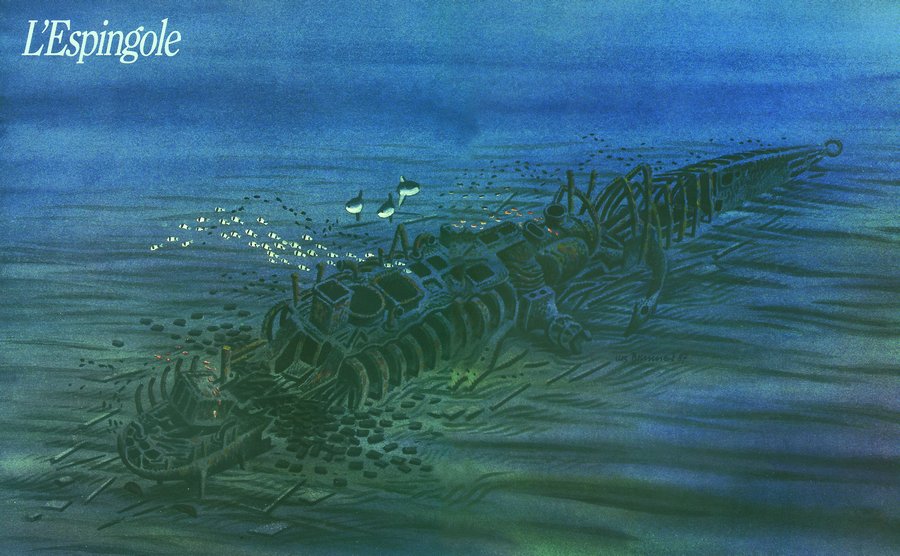
The Espingole is the wreck of a French torpedo boat destroyer dating from 1900 and ranks among the most distinctive dive sites in the Bay of Cavalaire. The warship, approximately 56 meters in length, ran aground on a rock near Cap Lardier in 1903 and, following failed salvage attempts, sank shortly thereafter while under tow.
Today, the wreck rests on a sandy seabed at a depth of approximately 38 to 40 meters, listing heavily to one side and overgrown with rich Mediterranean marine life. As such, the Espingole makes for an impressive dive site for experienced divers seeking to combine history with the unique atmosphere of a shipwreck.
Le Trafik
Merchant Cargo Ship
Travel time: 10 minutes; diving depth: 45-60 m
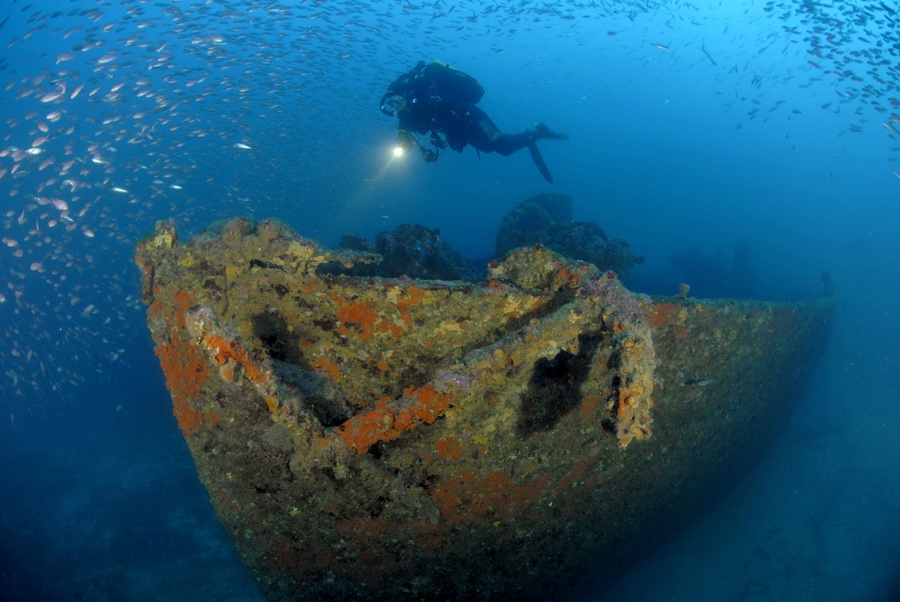
The “Trafik” is a small cargo vessel, likely of Norwegian nationality. It measures approximately 40 meters in length, with a beam of about 8 meters. In addition to its sails, the ship was equipped with a steam engine that likely developed a maximum output of 200 horsepower. While the hull was constructed of steel, the superstructure was likely made of wood – which would explain its absence.
The “Trafik” likely sank around the turn of the century; shipbuilding characteristics and the condition of the wreck support this conclusion. Since a considerable number of vessels named “Trafik” sailed under Nordic flags during that period, this particular wreck cannot be precisely identified.
The circumstances of the shipwreck remain equally unexplained; however, the absence of the propeller shaft, the propeller, and all interior furnishings suggests two probable conclusions:
- a voluntary sinking by the shipping company to save on scrapping costs, or
- the loss of the vessel during a towing operation, possibly en route to repairs.
The wreck was discovered by a group of coral divers, who, however, kept its existence a secret for a considerable period. The “Trafik” has only been dived for a few years.
The Dive: The “Trafik” rests upright on an open sandy seabed, swarmed by a number of larger fish. With her bow at a depth of 59 meters and her stern at 53 meters, the “Trafik” constitutes a challenging dive – if only due to the depth. In return, divers can marvel not only at the abundance of fish but also at the well-preserved main winch, the four anchors, and a host of other details. For instance, the western side of the wreck is relatively densely overgrown with gorgonians, and one can also spot Diadema sea urchins here – a rare sight in the Mediterranean.
Typically, this beautiful dive is rounded off by excellent visibility.